Word-of-Mouth might still be outperforming paid ads in Africa
Paid ads get the budget, but word of mouth still wins on trust, retention, and cost across African markets. This piece breaks down why referrals outperform paid acquisition, what PiggyVest and Moniepoint did differently, and how to build a referral engine that's actually trackable.
Deborah Alifa
Account Executive · Jun 28, 2026
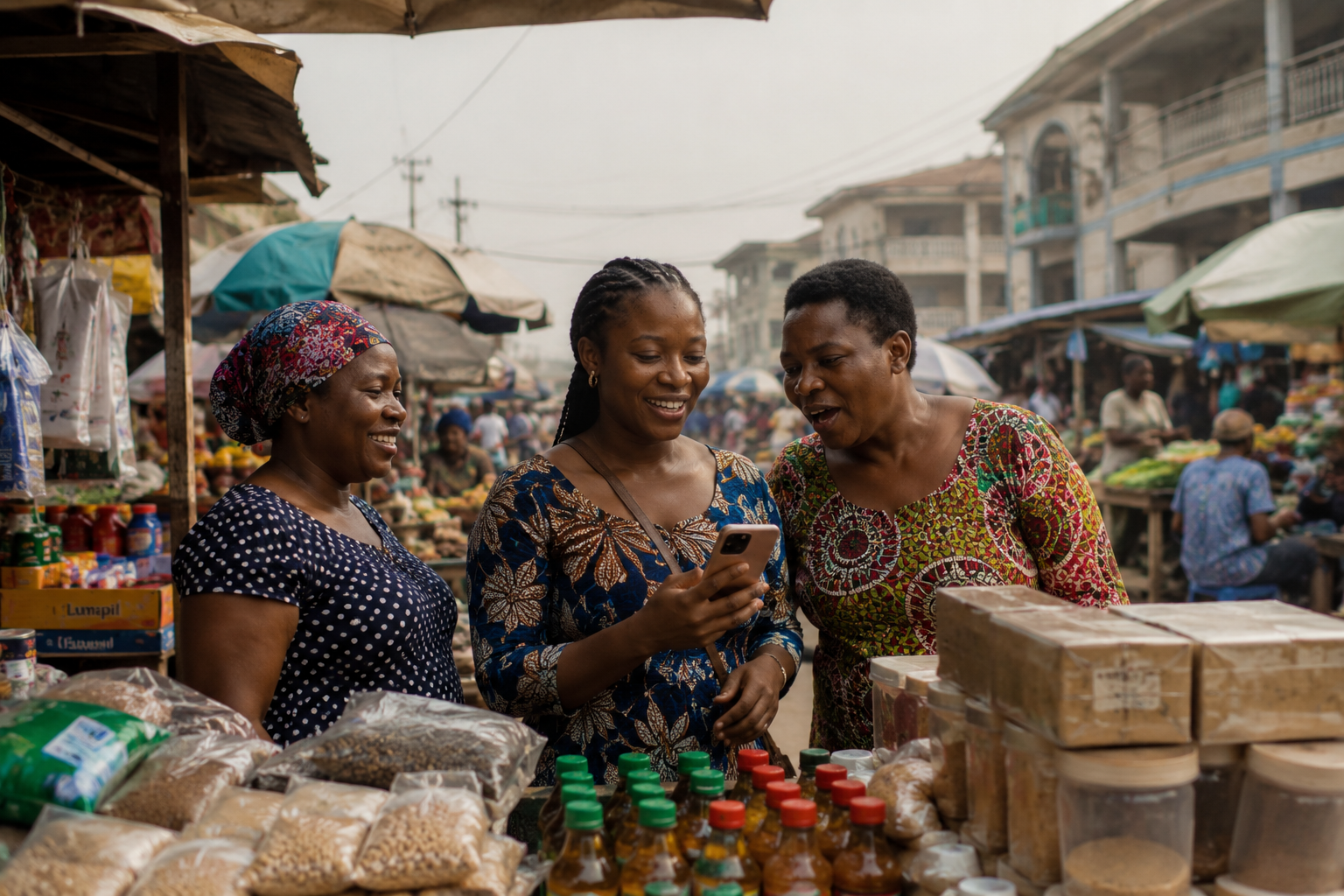
Across African markets, the most reliable acquisition channel is not the one with the biggest media budget. It is the recommendation passed between two people who trust each other, and the businesses systemizing that trust are outgrowing the ones still buying it.
According to Wise review, word-of-mouth drives an estimated 6 trillion dollars in global consumer spending every year, accounting for roughly 13% of all purchases worldwide. Globally, 92% of consumers say they trust a personal referral more than any other form of advertising, a figure that has barely moved in over a decade despite the rise of paid social, influencer marketing, and programmatic ads.
In African markets, where trust is built socially before it is built commercially, this dynamic is not a marketing footnote. It is the dominant channel, and the businesses that have systemized it are scaling faster than the ones still relying on paid acquisition alone.
Why word-of-mouth carries more weight in African markets
Across the continent, purchasing decisions are rarely made in isolation. A recommendation from a neighbor, a family member, or a respected figure in the community carries a different kind of authority than a recommendation from a brand talking about itself.
This is not unique to Africa, but it is more pronounced here. Community and word-of-mouth endorsement remain more persuasive than paid advertising in most African markets, where social proof functions as a form of due diligence before money changes hands. A product introduced by a brand is a claim. A product introduced by a trusted person is a verified claim, and African consumers consistently treat the two differently.
McKinsey identifies word-of-mouth as the primary factor behind 20 to 50% of all purchasing decisions globally. In markets where formal advertising regulation, brand history, and consumer protection infrastructure are still maturing, that share tends to sit even higher, because the personal recommendation does the trust-building work that institutional credibility would otherwise have to do.
The fintech playbook: turning users into distribution
Nigeria's fintech sector offers the clearest proof of what disciplined word-of-mouth looks like at scale. PiggyVest, which began as a simple digital savings platform in 2016, grew to nearly seven million users without the marketing budgets of a traditional bank. Much of that growth was carried by users who brought in friends, family, and colleagues to join shared savings goals, turning the product itself into the referral mechanism rather than treating referrals as a bolt-on campaign.
Moniepoint followed a similar logic through its agent network rather than a consumer app. By building trust at the point of transaction, through agents embedded in markets and communities, the company now processes the majority of in-person payments in Nigeria, reaching that position through embedded local trust rather than mass-market advertising.
The pattern across Nigeria's fintech winners is consistent. None of them out-advertised the incumbent banks. They out-trusted them, person by person, transaction by transaction, until the product became the thing people recommended rather than the thing brands had to push.
Why referral programs outperform paid acquisition on quality
Referral programs do not just produce more customers. They produce better ones. Referred customers consistently show higher lifetime value, higher retention, and lower acquisition cost than customers brought in through paid channels, because they arrive having already been vetted by someone they trust.
This matters even more in price-sensitive African markets, where the cost of acquiring a customer through paid ads keeps climbing as platforms become more competitive, while the cost of earning a referral stays largely fixed: deliver a good experience, and the recommendation follows for free.
A well-known psychology holds here too. People do not only refer products they like. They refer products that make them look informed, generous, or switched-on to the people they are recommending to. A referral is rarely just product feedback. It is also the referrer lending their own credibility to the brand, which is precisely why a referral converts faster and trusts deeper than an ad ever could.
Why so many African businesses still underinvest in referrals
Despite the evidence, referral programs remain underbuilt across African businesses. Most brands still default to boosted posts, influencer shoutouts, or radio spend as their primary growth lever, treating word-of-mouth as something that happens to them rather than something they can deliberately engineer.
Part of this comes down to attribution. A radio ad produces a media report. A referral often produces nothing more than a customer mentioning, almost in passing, that a friend told them about the business. Without a structured referral system, that signal is invisible to the same marketing team that would happily report on click-through rates from a campaign that converted far fewer people.
The businesses correcting this are building simple, trackable referral mechanics: a unique code, a tangible incentive for both the referrer and the new customer, and a visible record of who brought whom. This is the same logic behind Antropee's own Partner Network, where referrers earn a flat commission for every client introduction that converts, because measured word-of-mouth still outperforms unmeasured advertising.
How African brands can build a referral engine that works
A referral program is not a widget bolted onto checkout. It is an extension of the product and customer experience, and it only works when the underlying experience is worth talking about in the first place.
Make the product the pitch. PiggyVest's group savings feature did not need a script for users to recommend it. Saving toward a shared goal with friends or family is inherently social, so the referral happened inside the product, not around it.
Reward both sides of the referral, not just one. Programs that only reward the existing customer create a transactional feel that weakens the trust being transferred. Rewarding the new customer too keeps the recommendation feeling like a genuine favor rather than a sales pitch in disguise.
Track it like a channel, not an afterthought. If a referral program has no dashboard, no attribution code, and no owner, it will quietly underperform every paid channel sitting next to it on a slide, not because it converts worse, but because nobody can prove it converts better.
Let community, not just individuals, carry the message. In markets where group identity and community standing matter as much as individual preference, referral mechanics built around shared goals, group purchases, or community leaders tend to outperform programs built purely around one-to-one incentives.
Paid advertising will always have a place in African marketing, particularly for awareness at scale. But the channel quietly outperforming it on cost, quality, and trust is the one that costs nothing to run and everything to ignore: word-of-mouth, deliberately built into the product and systemized enough to track.
The brands winning distribution in Africa right now are not the loudest. They are the most recommended, and that distinction is earned in the product experience long before it shows up in a referral dashboard.
Building a referral engine that actually moves revenue requires the same discipline as any other growth channel: clear incentives, clean tracking, and a product worth talking about in the first place. That is the kind of growth infrastructure Antropee builds with ambitious African brands.
Written by
Deborah Alifa
Account Executive at Antropee. Writing about marketing strategy, brand-building, and growth in African markets.