Why African brands are losing the trust battle to foreign alternatives, and how to win it back
African consumers admire homegrown brands but still buy foreign ones at scale, a gap Brand Africa data shows clearly: 86% admire African brands, yet only a small fraction make up what they actually consume. This piece breaks down why that gap exists and the specific, repeatable habits, not bigger campaigns, that are starting to close it.
Deborah Alifa
Intern · Jun 28, 2026
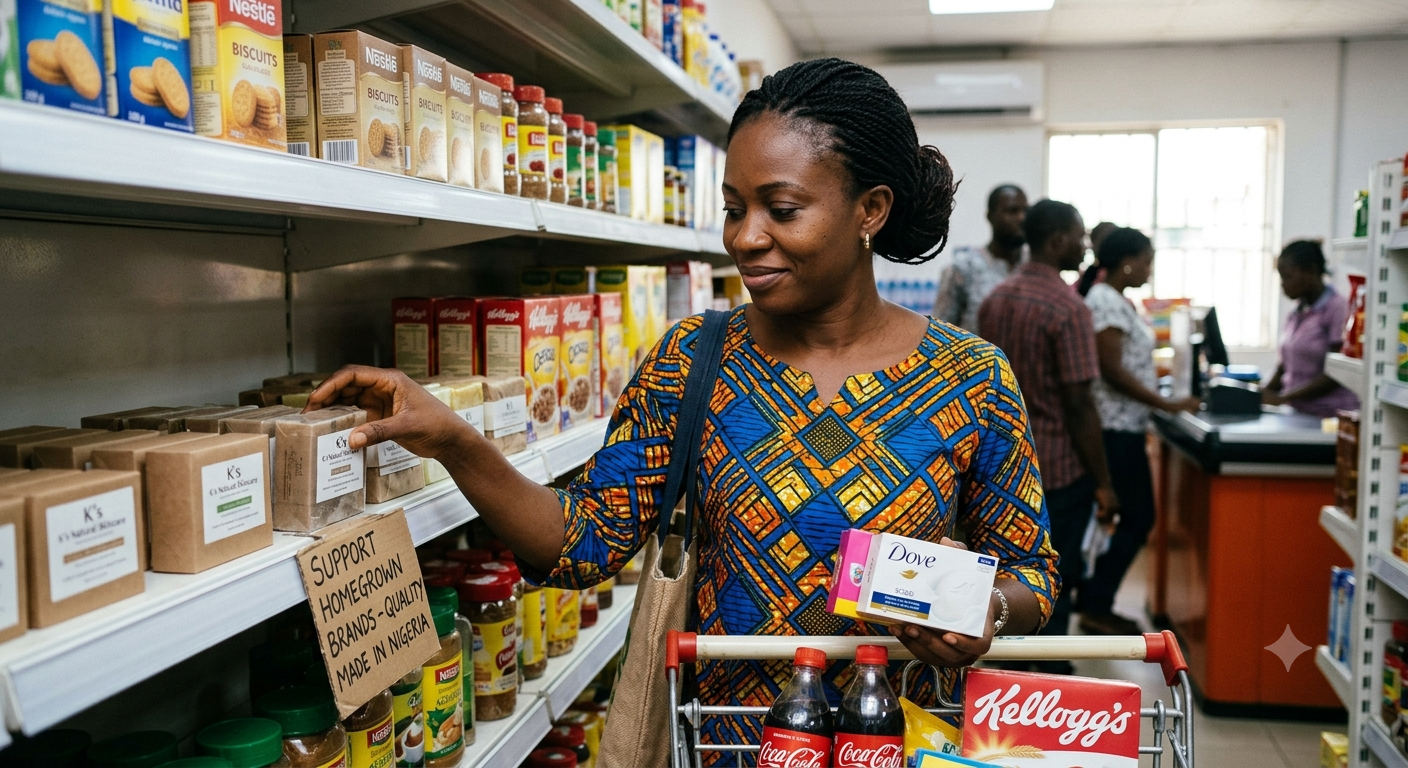
African consumers admire homegrown brands but still buy foreign ones at scale. This is the trust-to-purchase gap, and closing it is now the single biggest growth lever African brands have in 2026.
For the sixteenth year in a row, Africans have ranked non-African brands as the most admired brands on the continent. Nike, Adidas, Samsung, Apple, and Coca-Cola occupy the top five spots. Not one African brand makes the top ten. This is not a story about quality. It is a story about trust, and trust is a problem African businesses can actually solve.
The African brand trust gap
The brand trust gap describes the distance between admiration and adoption. Consumers say they believe in local brands, then buy the imported alternative anyway. According to Brand Africa Survey, in Uganda, 65% of consumers say they have confidence in local brands, but only 35% actually consume them. Across the wider continent, 86% of Africans say they admire African brands, yet only 14% of the brands they consume most are African.
This is not a perception problem that more advertising will fix. It is a structural gap between what consumers believe and what they are willing to risk their money on. Closing it requires understanding where the gap actually lives, not just acknowledging that it exists.
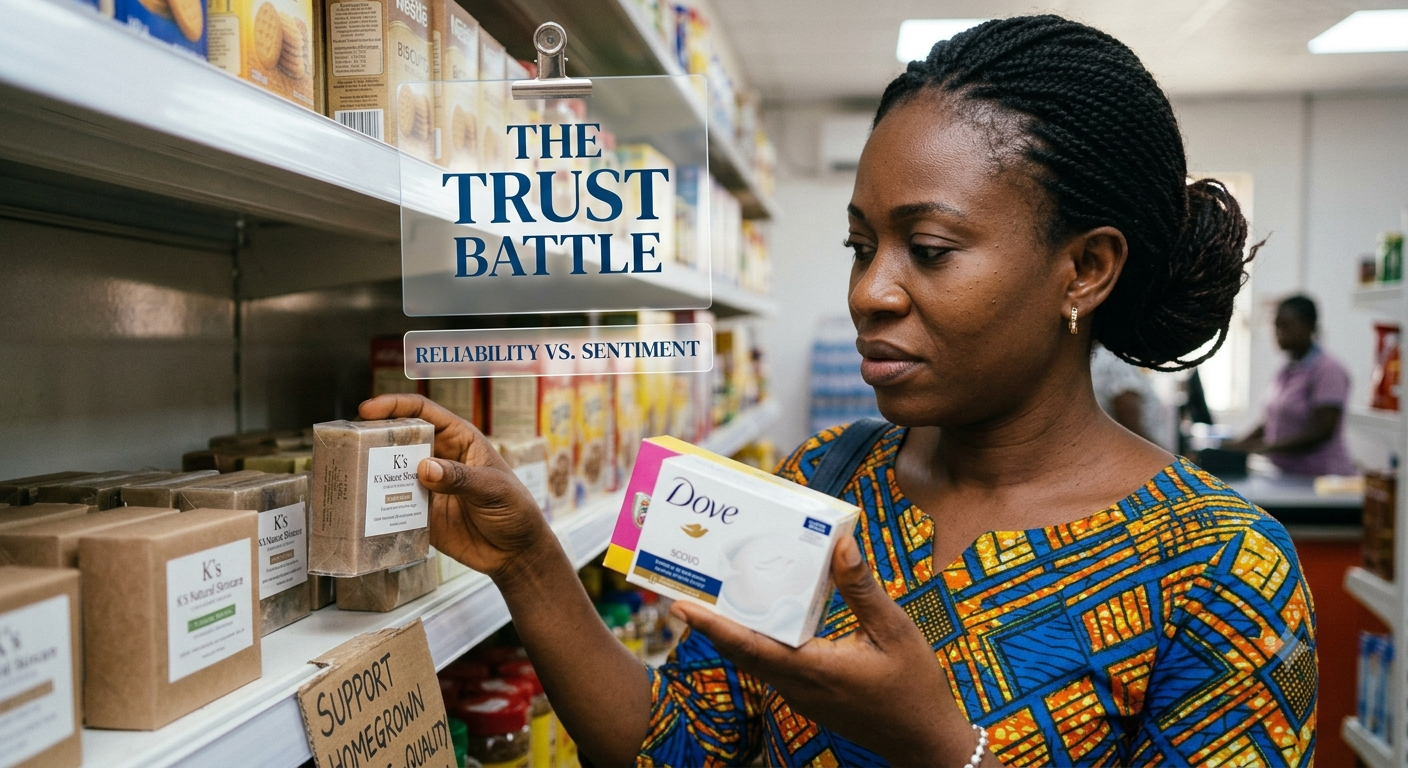
Why foreign brands still win the trust battle in Africa
Foreign brands are not winning because they understand African consumers better. They are winning because they have spent decades building three things African brands often have not: consistency, visibility, and proof of reliability under pressure.
Quality is now the single biggest factor driving purchase decisions across every major FMCG category in Africa, ahead of both price and brand recognition. Consumers are not choosing Coca-Cola or Nike because they are cheaper. They are choosing them because the experience is the same every single time, in every market, regardless of who is behind the counter.
African brands frequently lose here not because the product is worse, but because the experience is inconsistent. A product that performs well in Lagos but disappoints in Lusaka has not built a brand. It has built a roll of the dice, and consumers notice.
The real cost of inconsistent experience
Globally, domestically headquartered brands enjoy a trust advantage of around 15 points over foreign competitors, rising to 30 points in markets like Germany. African brands, by contrast, are fighting from behind in their own backyard. The reason is rarely the product itself. It is what happens around the product.
Recent brand loyalty research across African markets found that 78% of consumers feel stronger loyalty to individual salespeople than to the brand they represent, and only 25% of consumers remain loyal to a brand regardless of price or circumstance. The other 75% are actively comparing, switching, and reassessing with every purchase.
For African brands, this means the battle is not won at the point of sale. It is won, or lost, in every single customer interaction that precedes it: the WhatsApp response time, the consistency of stock on the shelf, the way a complaint is handled.
What African consumers actually reward
Trust in Africa is not abstract. It is built on specific, observable behaviors that consumers track over time, often more carefully than marketers assume.
Sustainability and ethical conduct now influence purchase decisions for 95% of African shoppers, while 77% say they are willing to pay more for products from socially responsible brands. This is not a Western import of corporate social responsibility language. It is a continuation of something African consumers have always valued: brands that visibly contribute to the communities they sell into.
Word of mouth and community endorsement remain more persuasive than paid advertising across most African markets. A brand that earns the trust of one household earns access to an entire extended network. This is precisely why MTN and Dangote, the two highest-ranked African brands in the latest Brand Africa survey, are recognized as much for social contribution as for product performance.
How African brands can close the trust gap
The brands narrowing the gap are not doing it with bigger campaigns. They are doing it with disciplined, repeatable proof.
Fix the experience before fixing the message. A brand cannot out-advertise an inconsistent product. If the in-store experience, delivery time, or customer service varies by location, that variance is the actual brand message, regardless of what the campaign says.
Make community contribution visible, not occasional. Consumers are watching for sustained behavior, not a single CSR campaign timed to a product launch. Brands that show up consistently in the communities they serve convert admiration into purchase far faster than brands that show up once a year.
Treat frontline staff as the brand. With most loyalty now attached to individual people rather than logos, training, retaining, and empowering frontline teams is no longer an HR function. It is a marketing function with measurable return.
Compete on proof, not on patriotism. Asking consumers to buy African because it is African does not close the gap. Showing them a product that performs identically every time, backed by visible accountability when it does not, closes the gap.
Why this is an opportunity, not just a threat
African brands recovered to 15% of the world's most admired brands in 2026, up from a historic low of 11% the previous year, the sharpest single-year recovery the survey has ever recorded. This rebound did not happen by accident. It happened in a year when South Africa hosted the G20 for the first time on African soil and Kenya co-hosted a major continental summit, both of which put African institutions and brands under sustained, credible global attention.
The lesson is direct. Trust in African brands moves when African brands are visibly consistent, visibly accountable, and visibly present, not when they simply ask to be chosen out of loyalty to origin.
The Bottom Line
The trust gap between African and foreign brands is real, well documented, and closing slightly every year. But the brands closing it fastest are not winning with louder marketing. They are winning by removing the everyday inconsistencies that quietly taught consumers not to trust them in the first place.
Admiration is not the hard part for African brands. It already exists. The hard part, and the opportunity, is converting that admiration into the kind of reliable, repeatable proof that turns a one-time buyer into a brand's most effective salesperson.
Closing the trust gap is rarely a creative problem first. It is a strategy and consistency problem that creative work then has to express clearly, which is precisely where Antropee works with ambitious African brands.
Written by
Deborah Alifa
Intern at Antropee. Writing about marketing strategy, brand-building, and growth in African markets.