Why local language content converts better than perfect English in African markets
Polished English copy is not a sign of professionalism in African markets. For most consumers on the continent, it is a sign of distance, and distance kills conversion. This piece breaks down why local language content consistently outperforms English-first campaigns, what YouTube's 422-asset Africa campaign proved, and how to build a language strategy around how your audience actually buys.
Deborah Alifa
Intern · Jul 10, 2026
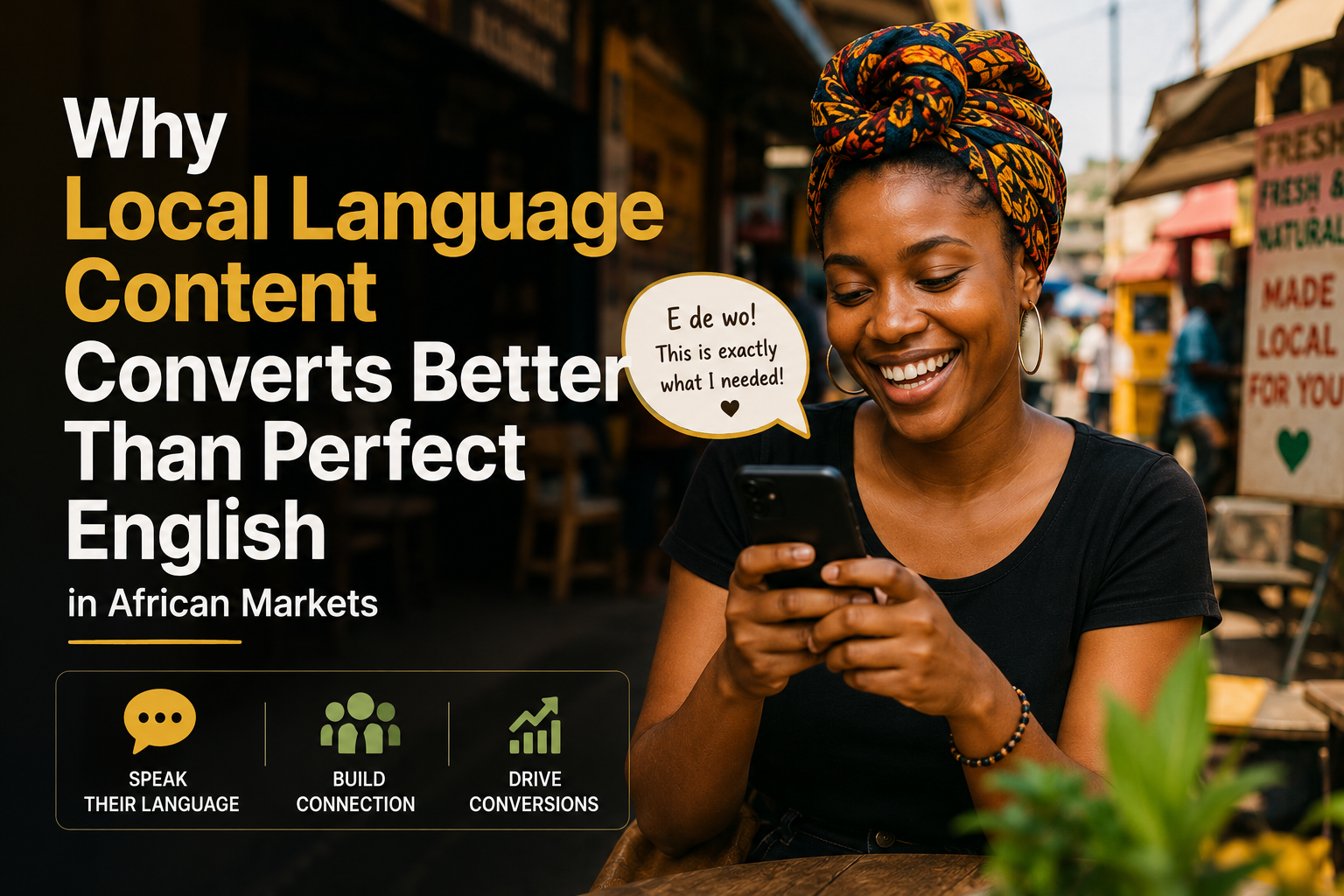
Sometimes, polished English copy is not a signal of professionalism in most African markets. It is a signal of distance. And distance is precisely what kills conversion.
Africa has more than 2,000 languages spoken across 54 countries, yet most brands operating on the continent default to English, French, or Portuguese as their primary content language and treat local languages as an optional extra, something to consider after the main campaign is already built. The data is increasingly clear that this approach leaves conversion on the table, consistently, and in every category where it has been tested.
What the language gap actually costs African brands
Language is not just a delivery mechanism for information. In African markets, the language a brand chooses to speak in is itself a trust signal, and it lands before a single word of the actual message is processed.
Globally, 75% of consumers are more likely to buy a product from a website in their native language, even if they understand English perfectly well. In markets where English is a second or third language for most of the population, that preference is not a mild inclination. It is the difference between a message that feels like it was made for the reader and one that feels like it was made somewhere else and aimed vaguely in their direction.
Brands that invest in Swahili, Zulu, or Hausa content consistently report higher trust signals and conversion rates compared to English-only campaigns in the same markets. This pattern holds across categories, from FMCG to financial services to digital platforms. The conversion gap is not explained by the quality of the English. It is explained by the presence or absence of the feeling that the brand actually belongs here.
The YouTube campaign that measured it directly
In 2024, YouTube ran a campaign across Nigeria, South Africa, and Kenya that offers one of the most direct measurements of local language content performance on the continent.
For the Nigerian market, content for the campaign was developed in Hausa, Yoruba, Pidgin, Igbo, and English. South Africa received content in isiXhosa, Zulu, Afrikaans, and English. Kenya followed with Swahili and English assets. Across all three markets combined, 422 culturally adapted assets were produced for a single campaign. The outcome was a brand recall increase of 9.6% in Nigeria and 6.5% in South Africa. This is not a marginal performance difference. It is the kind of lift that most campaigns working in English alone are not producing, regardless of budget or creative quality.
The significance of that campaign is not just in the numbers. It is in what the decision to build 422 assets rather than one or two translated versions says about how seriously local language content needs to be resourced to actually work.
Why English-First is a distribution strategy masquerading as a content strategy
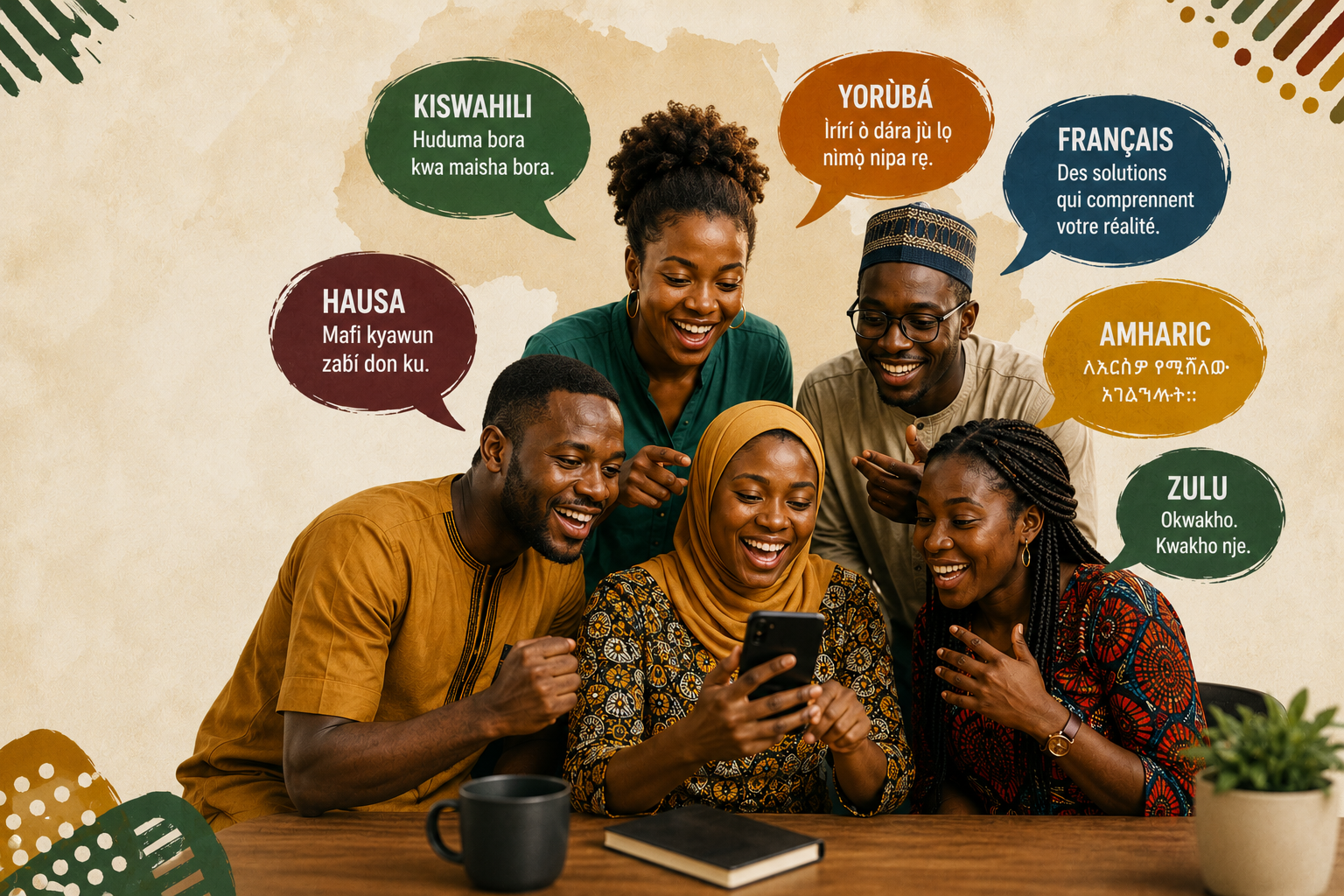
Most African brands that default to English are not doing it because research told them English converts better. They are doing it because English is easier to produce, review, and approve internally, particularly inside teams where senior decision-makers are more comfortable in English than in Pidgin or Hausa or Sheng.
This is a resourcing and workflow problem being solved at the expense of the audience. The result is content that is grammatically correct, professionally presented, and quietly alienating to the people it is supposed to move.
The most telling evidence of this is the mobile consumption pattern now dominant across African markets. Smartphone penetration is accelerating across sub-Saharan Africa, with audiences discovering, sharing, and engaging with content almost entirely on mobile devices, often skipping desktop entirely. The content winning on those devices is short-form, vertical, natively voiced, and built in the language the viewer actually thinks in, not the language the brand's internal approval process runs on.
TikTok's rise across the continent followed this logic directly. The platform grew by empowering local creators to speak to local audiences in local languages and dialects, creating content that felt personal and immediate rather than produced and translated. Short-form video in a regional language regularly generates two to five times higher engagement than equivalent content in English, because it does not feel like content reaching down to the viewer. It feels like content made among them.
What happens when brands get the language layer right
The East African market offers a consistent set of examples. In Kenya, partnerships with creators who speak Sheng, the urban hybrid of Swahili and English used natively by younger Nairobi audiences, produce measurably more authentic connections than polished, high-budget campaigns delivered in formal English. For growing businesses in the region, working with creators who reflect local culture and speak in the register their audience actually uses has become a faster trust-builder than any generic campaign equivalent.
The same dynamic plays out in West Africa, where Nigerian Pidgin functions as the continent's most inclusive informal bridge language, understood across ethnic lines and carrying a warmth and credibility that formal English simply does not. Brands that build Pidgin into their content, not as a gimmick but as a genuine voice choice, find that the message travels differently. It lands as insider knowledge rather than advertising.
Across East and West Africa, a consistent pattern has emerged: FMCG brands abandoning desktop-centric, English-first content strategies in favour of WhatsApp-based campaigns and short-form video content built in local languages are outperforming those that have not made the same shift. WhatsApp messages achieve open rates as high as 98%, and the campaigns converting best inside that channel are the ones that sound like a friend passing something on, not a brand broadcasting into a feed.
The Practical Case: localization lifts every metric it touches
The performance argument for local language content is now well documented beyond Africa too. Localized advertising campaigns outperform their English counterparts 86% of the time globally. Businesses that invest in multilingual content see sales increases of at least 25% on average, with some markets recording 70%. Localization increases search traffic by 47%, boosts website visits by 70%, and raises conversion rates by 20%, and those figures are conservative averages across diverse markets rather than best-case outliers.
For African brands, these global averages likely understate the actual opportunity, because African markets sit at the far end of the language-preference spectrum. In a country like Nigeria, with over 500 spoken languages and a population where English functions as a formal register rather than a first language for the majority, the distance between what a consumer hears in English advertising and what they feel in Pidgin or Yoruba content is not a linguistic gap. It is an emotional and relational one.
How African brands can build a local language content strategy that actually works
Start with the language of the purchase decision, not the language of the boardroom. The question is not which language the brand is comfortable producing content in. It is which language the target customer uses when recommending a product to a friend, because that is the register that carries trust.
Treat local language content as a primary channel, not a translated afterthought. The YouTube campaign produced 422 assets for three markets, not three assets with subtitles. Local language content works when it is built in that language from the brief, not when English copy is handed to a translator at the end of the process.
Use platform behavior as a guide. The channels where local language content performs best in Africa right now are WhatsApp, TikTok, and Instagram Reels. Content built for those platforms, in the language and register native to each market, converts faster and travels further than anything produced for desktop or structured for formal English audiences.
Invest in local creators, not just local translators. A creator who speaks Sheng or Pidgin natively brings something a translator cannot: the cultural instinct to know what will feel true to the audience and what will feel imported. The performance gap between translated content and creator-led local content is consistently significant.
English is not a neutral choice in African markets. For most of the continent's consumers, it is a formal register associated with institutions, authority, and distance, none of which are qualities that move product or build loyalty at the shelf or the scroll.
The brands closing the conversion gap in African markets are not the ones with the most polished campaigns. They are the ones speaking in the language their customers reach for when they talk to the people they trust, and that is rarely perfect English.
Building content that actually converts in African markets means making language choices based on audience behavior rather than internal convenience. That is the kind of audience-first content and growth strategy Antropee builds with African brands and the businesses entering their markets.
Written by
Deborah Alifa
Intern at Antropee. Writing about marketing strategy, brand-building, and growth in African markets.